
Protects
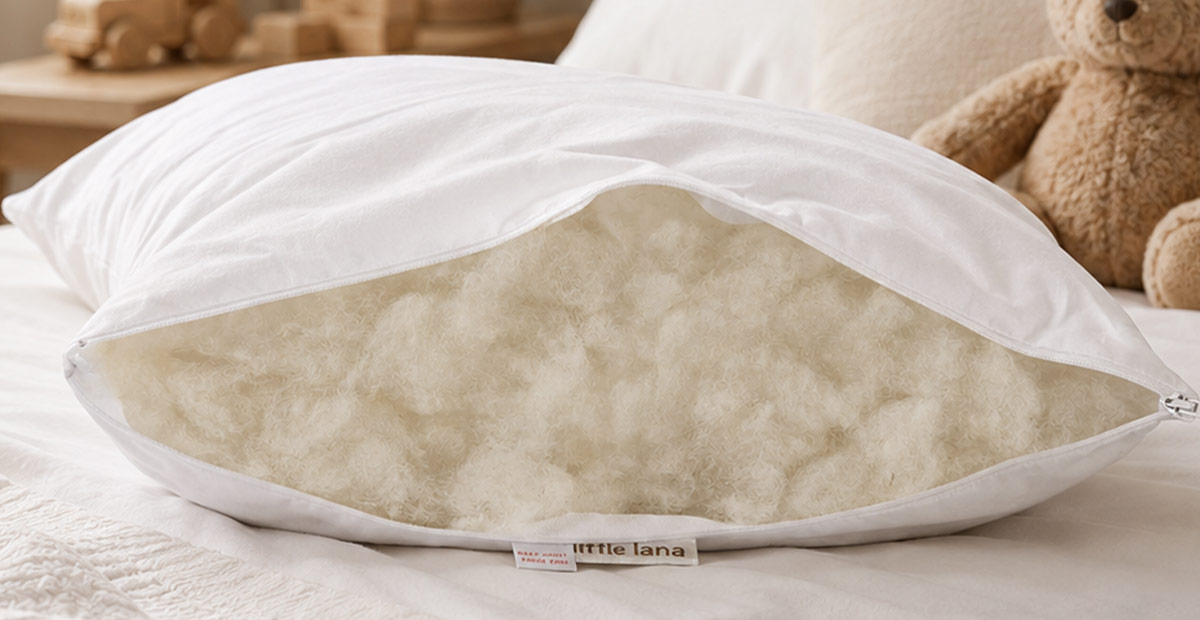
The casing helps contain and protect the natural wool filling inside the product.
The Materials Around the Wool
When people think about a wool duvet or pillow, the wool inside usually receives all the attention. And rightly so. But the fabric surrounding that wool matters too.
The cotton casing is not simply there to hold everything in place. It protects the filling, shapes the feel of the finished product and helps the natural fibres work together as bedding.
At Devon Duvets, we have our cotton woven with the same consideration we give to the wool inside it.
It may be the layer you rarely see, but it is one you can feel.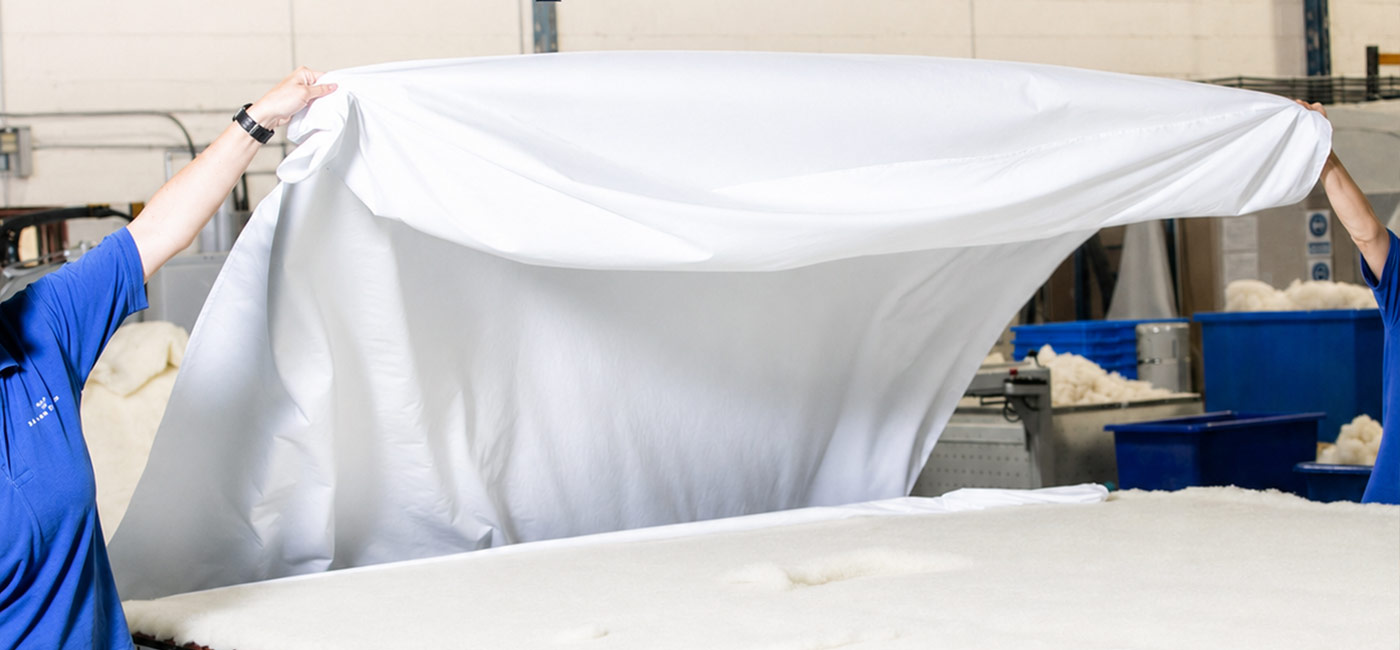
Not Just a Cover
Once a duvet cover or pillowcase has been added, the product casing is largely hidden from view. That does not make it unimportant.
The casing helps contain and protect the natural wool filling inside the product.
The fabric influences how a duvet, pillow or topper takes its finished shape.
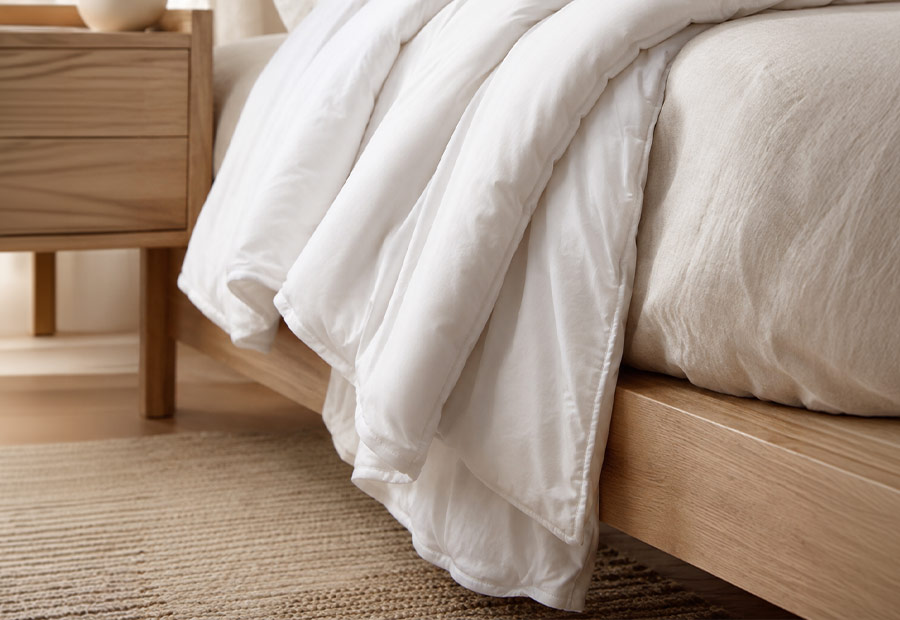
A supple casing helps a duvet fall more naturally across the body and bed.
The casing needs to work with the breathability of the natural wool, rather than restrict it.
Even beneath another cover, the character of the casing contributes to how the finished bedding feels.
The Fabric That Works With the Wool
Wool has softness, loft and natural movement. The fabric surrounding it needs to allow those qualities to remain part of the finished bedding.
If a casing is too stiff, the wool cannot settle as naturally. If it is heavily finished, the finished product can feel flatter or more restricted.
The right cotton allows the wool to breathe, loft, settle and drape. That balance is important.
A Devon Duvets wool duvet should have loft without feeling rigid. A wool pillow should feel supportive while remaining comfortable close to the face.
The cotton should complement the wool's ability to manage warmth and moisture.
Supple fabric allows the natural filling to retain shape and fullness.
Bedding should respond naturally as you move rather than feeling hard or overly structured.
The right casing helps a duvet settle naturally around the body and across the bed.
Why Drape Matters
A duvet is not a rigid object. It needs to fall across the bed, settle around the body and move naturally during the night.
The cotton casing helps determine that movement.
A fabric that is unnecessarily stiff can make the whole duvet feel more structured. A carefully chosen cotton casing allows the wool to retain its natural loft while still giving the finished duvet softness and drape.
Premium Percale Cotton
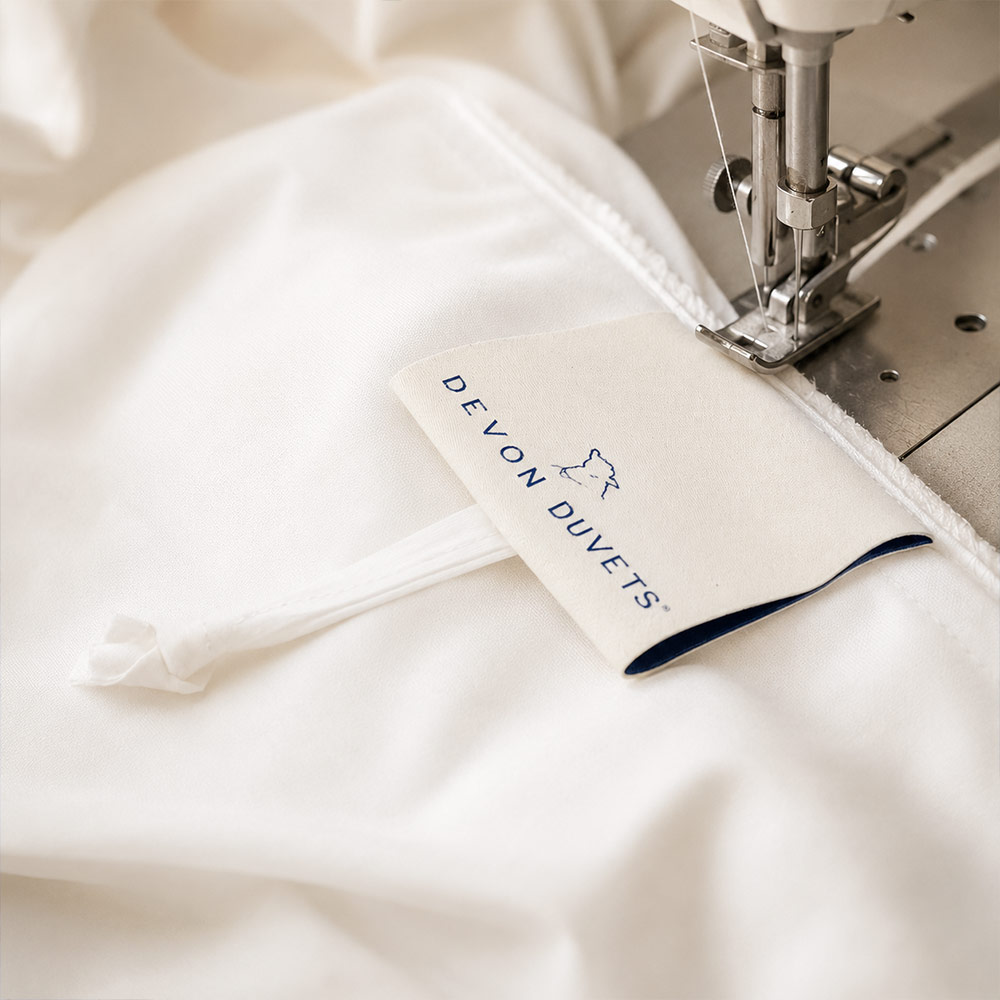
For our wool duvets and pillows, we use a premium percale cotton woven especially for us to achieve the quality and feel we require.
Percale has a smooth, fresh character and a close, even weave. It is strong enough to protect the filling while remaining comfortable, supple and breathable.
Although this fabric may disappear beneath a duvet cover or pillowcase, its quality remains part of the finished product every night.
We believe a natural wool filling deserves a casing chosen properly, rather than one treated as an afterthought.
Selected for its smooth feel, close weave, strength and ability to work comfortably with natural wool.
Our duvet and pillow casing uses BCI cotton as part of our considered approach to cotton sourcing.
The cotton used for our duvet and pillow casing is OEKO-TEX Standard 100 certified.
Close to the Face
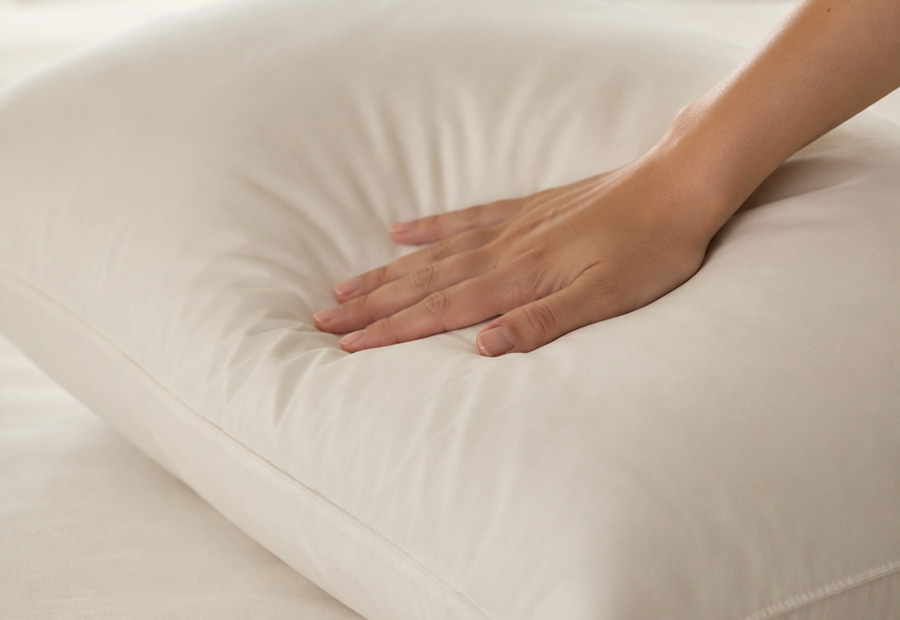
A pillow has an especially close relationship with the body. Even beneath a pillowcase, the structure and character of its casing help determine how the pillow feels beneath the head and neck.
We want our pillow casing to protect the wool without making the pillow feel hard or heavily structured.
The smooth percale cotton works with the wool filling so that the pillow can remain supportive, breathable and naturally comfortable.
Why We Avoid a Stiff, Crackly Finish
Some fabrics are heavily finished to create an extremely smooth, compressed or polished surface. That can change both how the fabric behaves and how it feels within bedding.
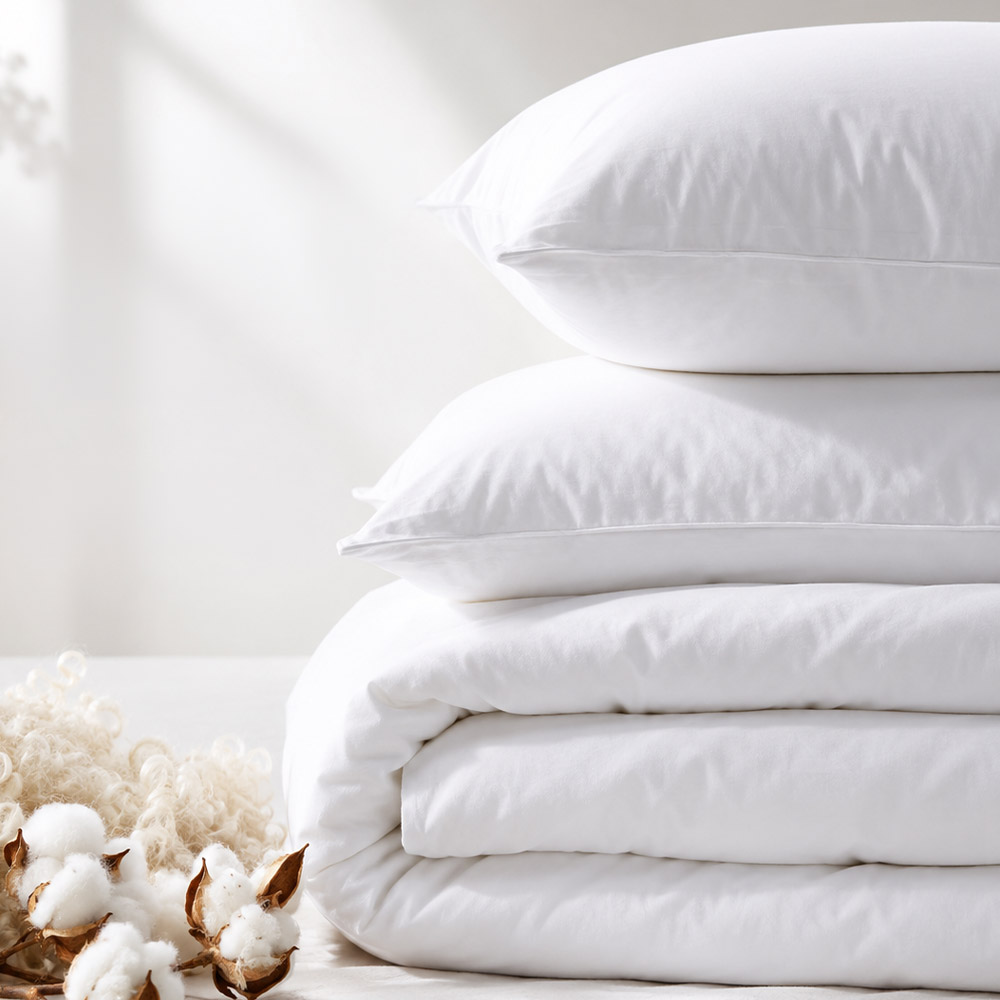
We want the fabric to feel comfortable, supple and quiet while allowing the wool beneath it to move and settle naturally.
A highly compressed or heavily finished fabric can feel harder, noisier or less responsive than we want for natural bedding.
Calendaring is a textile finishing process that uses pressure, and often heat, to smooth or compress the surface of fabric. It can create a polished finish, but it may also change the natural softness, movement and character of the material.
Different Cotton for Different Products
A duvet, pillow and mattress topper all behave differently. The fabric surrounding the wool should therefore be chosen for the role each product needs to perform.
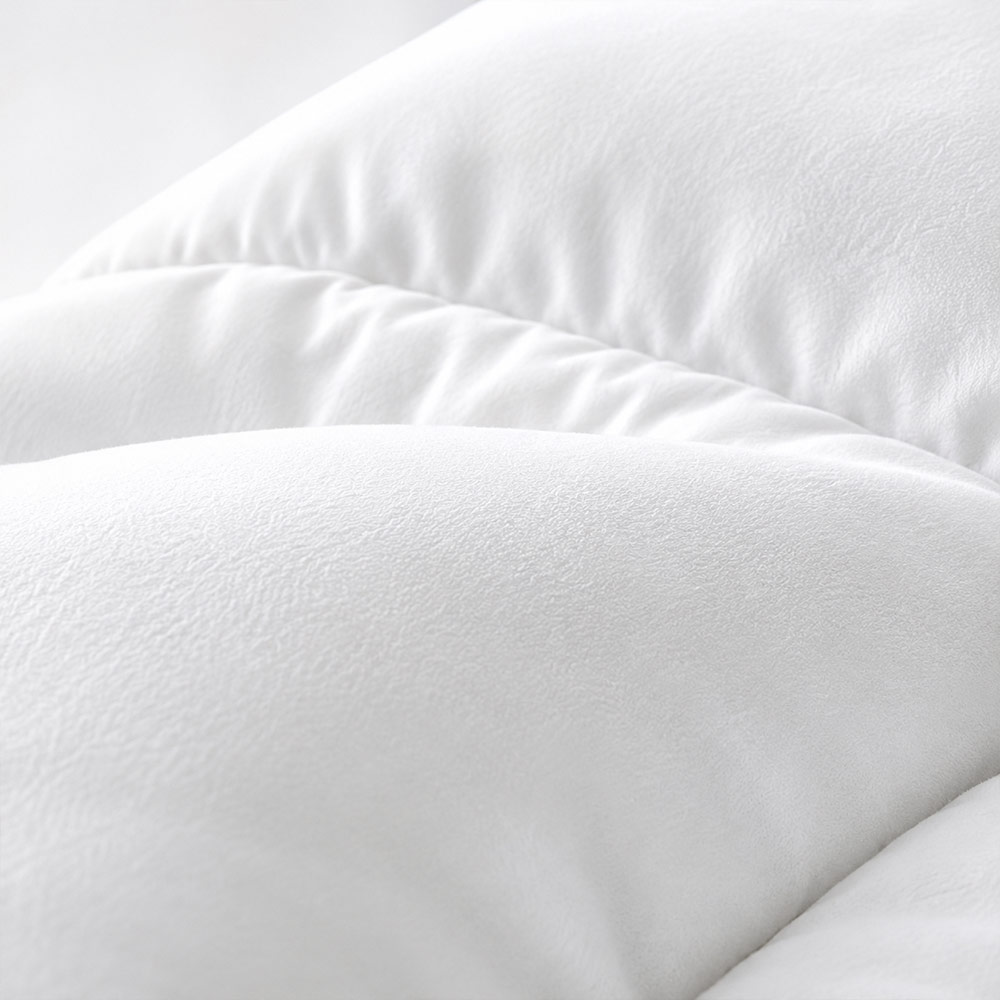
Our duvets and pillows require a smooth, breathable casing that protects the filling while allowing the wool to retain loft, movement and natural comfort.
Premium percale gives us the balance of strength, smoothness and breathability these products require.
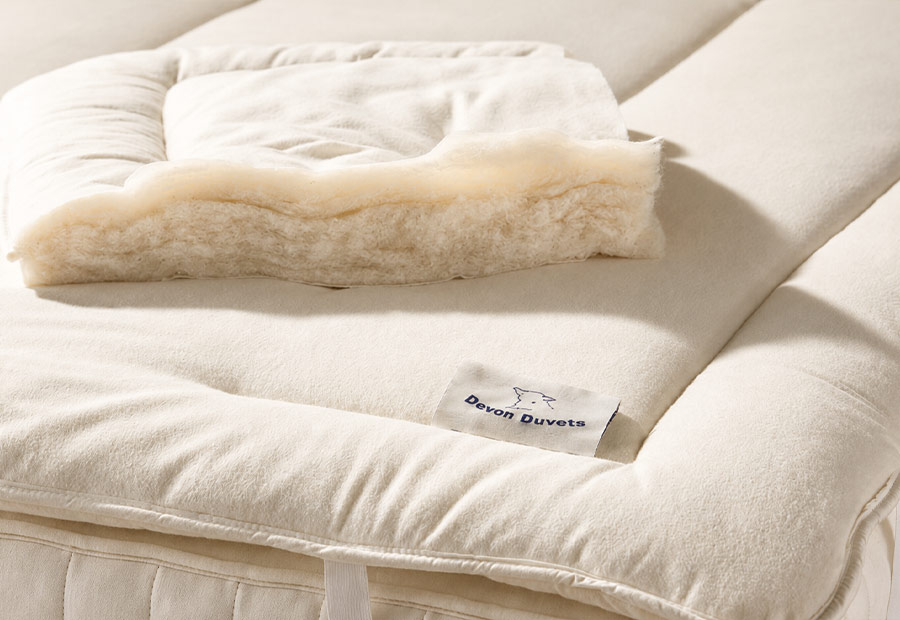
Our mattress toppers have different requirements. Their outer fabric needs to contribute to a softer sleeping surface while supporting a generous layer of wool beneath the body.
For these products, we use a brushed cotton woven for us in an OEKO-TEX certified mill.
needs loft, breathability and enough softness to drape naturally across the body.
needs comfort, breathability and a casing that allows the filling to support without feeling rigid.
needs softness, structure and a surface able to settle comfortably across the mattress.
Fabric Chosen for Purpose
There is no reason every natural bedding product should use the same outer fabric simply for the sake of uniformity.
We choose the fabric according to how the finished product needs to feel and behave.
That means smooth percale where drape and breathable containment are important, and brushed cotton where a softer mattress surface is the priority.
The differences are subtle, but subtle details become noticeable when something is used night after night.
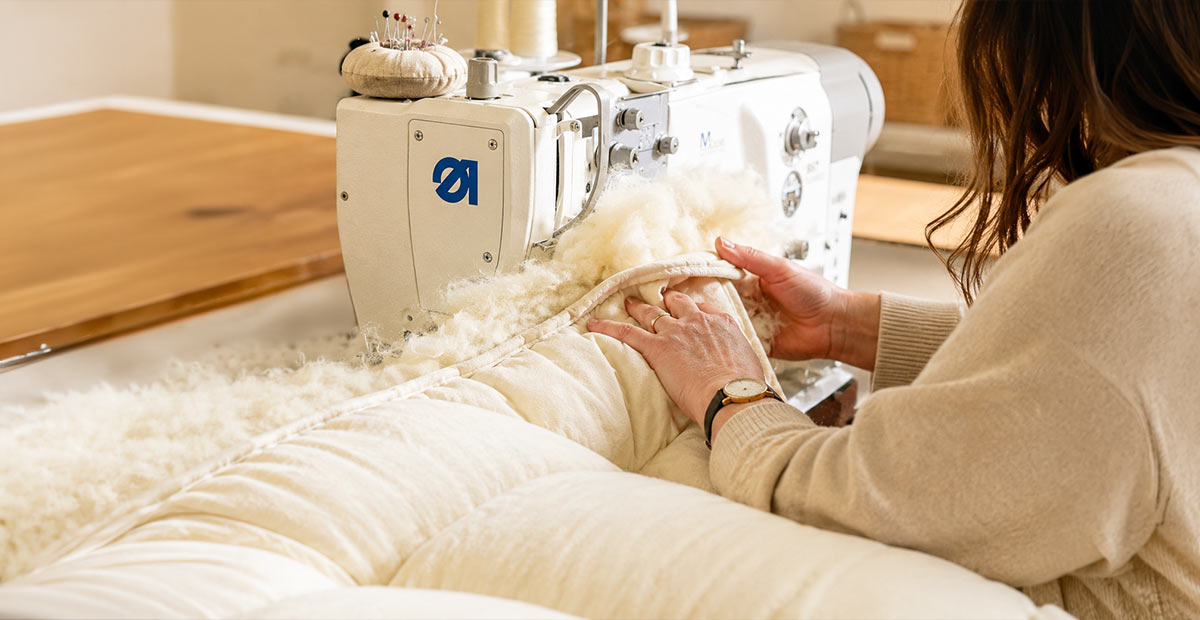
A Detail Worth Caring About
The cotton casing may not be the first thing you notice about a Devon Duvets product.
Once your duvet cover or pillowcase is in place, you may hardly see it at all.
But you continue to experience what it contributes.
At Devon Duvets, we believe every layer should be chosen with care, including the ones customers may rarely see.
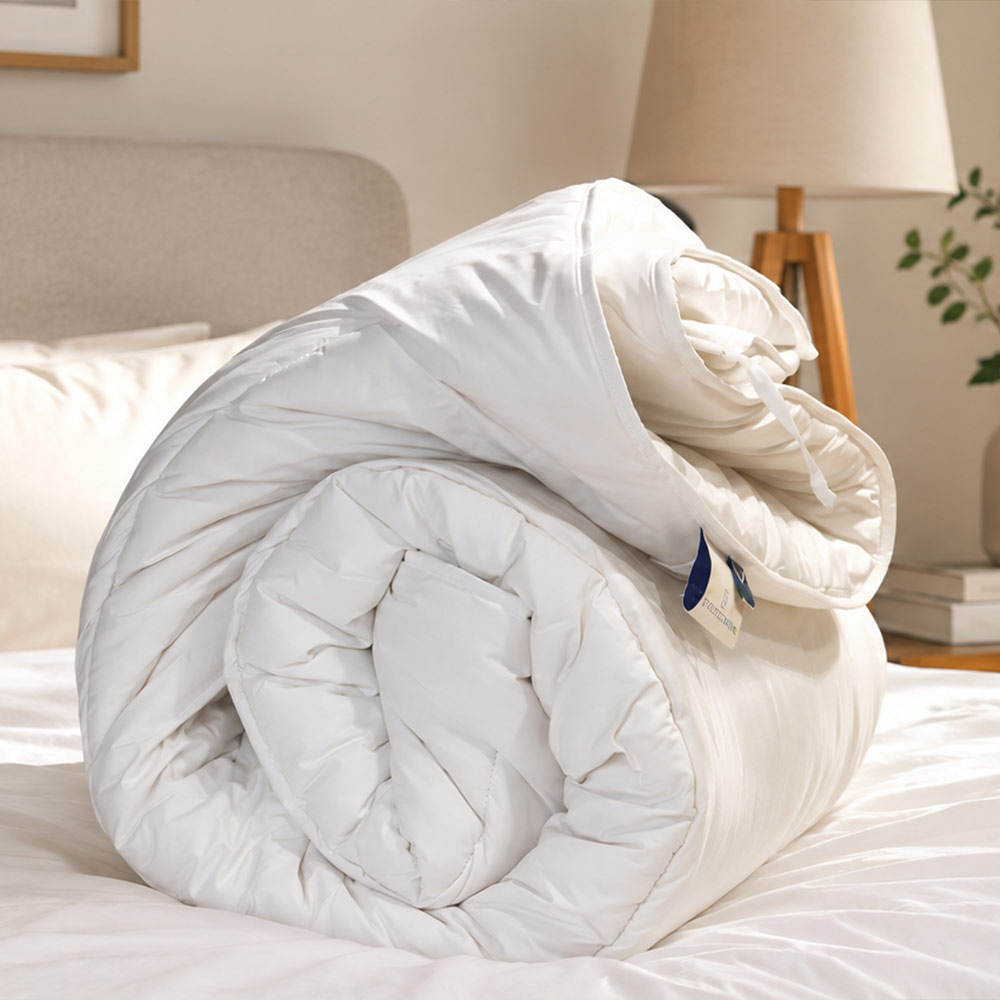
Made to Work Together
The wool may sit at the heart of the product, but the finished bedding depends on every material around it doing its job properly.
Wool, cotton, stitching, construction and skilled making all work together.
The aim is not to draw attention to each individual component when you climb into bed.
Quite the opposite. When every material has been chosen properly, the finished product should simply feel right.
The Layer You Can Feel
It may be hidden beneath your bed linen, but it remains part of the product every night.
Natural bedding is not only about what is inside. It is about how every material works together to help create a more comfortable, breathable and naturally made place to rest.
Sometimes the quietest details are the ones doing the most work.
Every Layer Matters
From the wool filling to the cotton surrounding it, we choose each material according to how it contributes to the comfort, quality and character of the finished bedding.
Because something does not stop mattering simply because it disappears beneath a duvet cover.