
Temperature regulating
Wool helps retain warmth when needed while allowing excess warmth to move away.
Understanding Wool
Wool is one of nature’s most remarkable fibres, and it is beautifully suited to bedding.
For centuries, wool has been used to keep people warm, comfortable and protected. But when it comes to sleep, wool does much more than simply provide warmth.
It breathes. It manages moisture. It helps regulate temperature. It creates loft and cushioning, while helping the sleep environment feel fresher and more balanced.
That is why we choose wool for our duvets, mattress toppers, pillows and mattress protectors.
It is not just natural. It is naturally clever.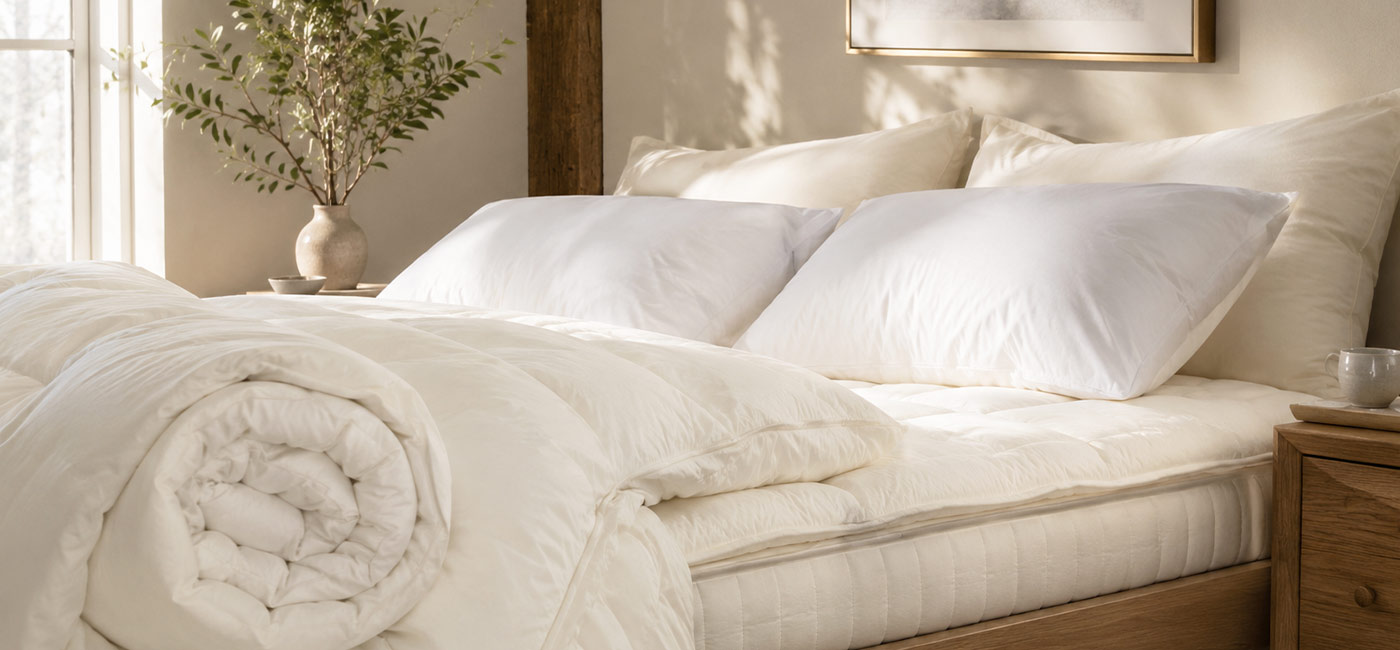
Wool helps retain warmth when needed while allowing excess warmth to move away.
Its natural structure creates insulation while still allowing air, warmth and moisture to move.
Wool can absorb and release moisture vapour, helping the bed feel fresher and less clammy.
The fibre has natural springiness, helping create loft, cushioning and comfortable support.
Nature's Structure
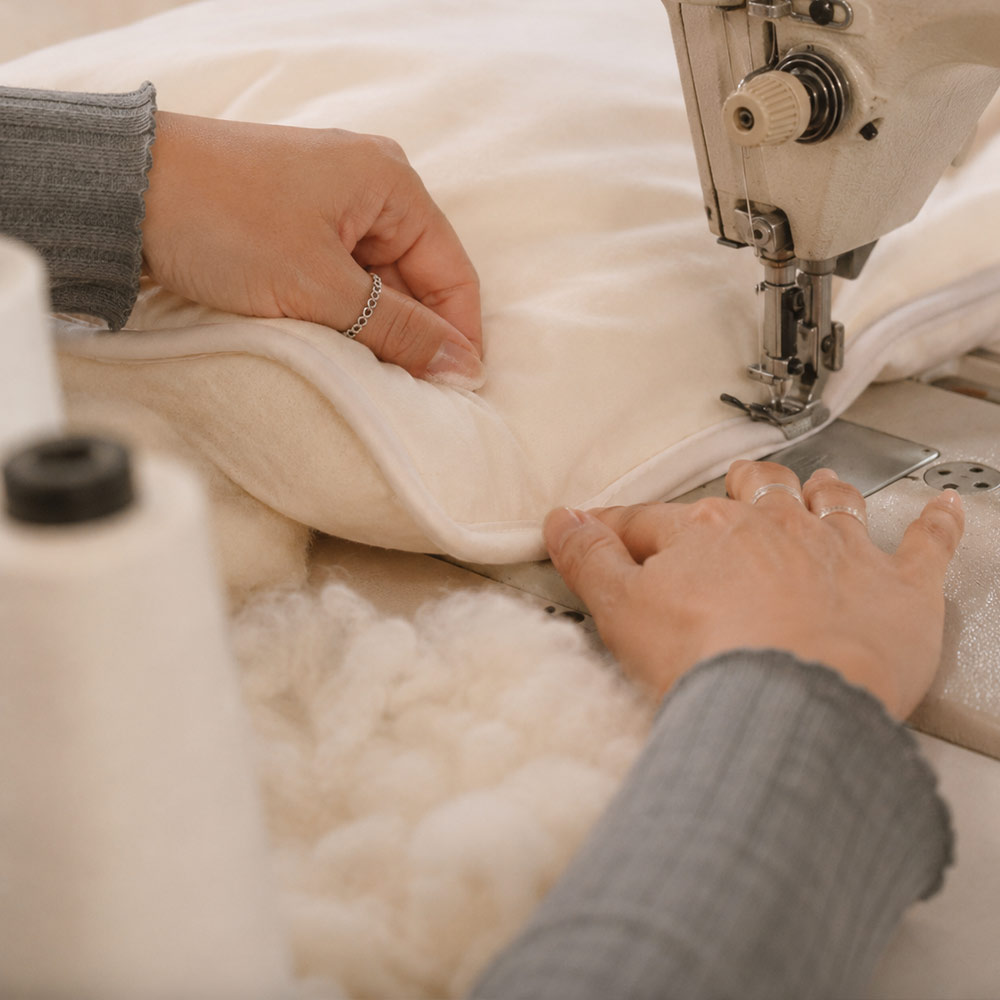
Wool is not simply a soft mass of filling. Individual fibres have a naturally crimped structure that helps create tiny pockets of air throughout the filling.
Those air spaces contribute to insulation and loft, while the fibre itself can interact with moisture vapour.
The result is a material able to offer warmth while still allowing the sleep environment to breathe.
That balance is what makes wool particularly interesting for bedding.
Natural loft helps create small insulating pockets of air.
The filling remains breathable rather than behaving like a sealed layer.
Wool can absorb and release moisture vapour as conditions change.
These qualities work together to create a more comfortable sleeping environment.

Temperature Regulation
One of wool’s most useful qualities is its ability to help regulate temperature.
Some bedding materials primarily work by trapping heat. That can initially feel cosy, but it can become uncomfortable if too much warmth builds during the night.
Wool behaves differently. It helps retain warmth when conditions are cooler, while its breathable structure allows excess warmth and moisture to move away more naturally.
This matters because body temperature is not static while we sleep. The bedroom changes too.
Wool helps the bed respond to those changes instead of simply treating every hour of the night as if it were exactly the same.
Breathability
Breathability is one of the most important qualities in bedding.
A breathable filling allows heat, air and moisture to move more naturally, helping reduce the heavy or clammy feeling that can occur when too much warmth becomes trapped.
Wool is able to create insulation through the small air pockets held within its natural structure, while still remaining breathable.
It can therefore feel warm without needing to feel suffocating or overly enclosed.
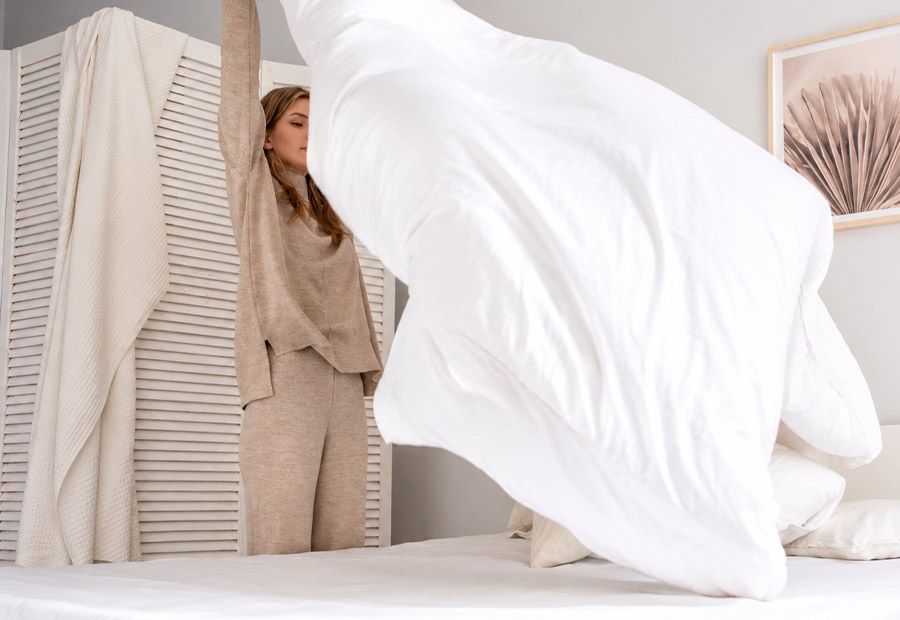
Natural insulation does not require the filling to behave like a sealed barrier.
Airflow helps create a softer and more balanced feeling around the body.
Breathability helps wool respond as the body and bedroom alter through the night.

Moisture Management
We all release moisture while we sleep through breathing and natural perspiration.
When that moisture becomes trapped within bedding, the sleep environment can begin to feel warm, damp or clammy.
Wool can absorb and release moisture vapour. This allows moisture to move away from the body and back towards the surrounding air as conditions permit.
This is valuable in duvets and toppers, where large areas of bedding sit close to the body, and in pillows, which remain close to the face and breathing space.
Normal breathing and perspiration introduce moisture vapour into the sleep environment.
The natural fibre can absorb moisture vapour rather than simply leaving it sitting against the body.
As the environment changes, moisture can move from the fibre into the surrounding air.
A Fresher Sleep Environment
Bedding that repeatedly holds warmth and moisture can begin to feel less fresh. Wool’s ability to breathe and manage moisture helps make it naturally well suited to the rhythm of nightly use.
Wool is naturally resistant to dust mites.
Dust mites tend to prefer warm and humid environments. Because wool helps manage moisture and remains breathable, it does not create the same kind of damp, warm conditions that dust mites tend to favour.
For people sensitive to dust mite allergens, this can make wool a thoughtful choice for bedding.
Wool’s natural properties do not mean bedding should be ignored indefinitely like a forgotten gym bag.
Wool bedding benefits from regular airing and the correct care for each product type.
Natural Comfort
Many modern bedding products use synthetic fillings because they can be lightweight, practical and inexpensive to manufacture.
Wool offers comfort through the natural properties of the fibre itself.
Wool is naturally springy, insulating, breathable and moisture managing.
It can provide useful bedding performance without needing synthetic fibres, foams, glues or artificial bonding agents to create its basic natural characteristics.
Synthetic bedding can be lightweight, widely available and economical.
At Devon Duvets, we choose wool because we value a fibre that is naturally suited to warmth, breathability and moisture management.
Natural Loft and Resilience
Good bedding needs to remain comfortable through repeated use.
Wool has a natural springiness that helps create loft and cushioning. This makes it useful in several different parts of the bed.
In a duvet, loft helps create soft, breathable warmth. In a topper, wool creates cushioning between the body and mattress. In a pillow, the fibre provides natural support while remaining breathable.
Like every natural fibre, wool settles with use. Regular airing, shaking and turning where appropriate can help redistribute the fibre and maintain comfort for longer.
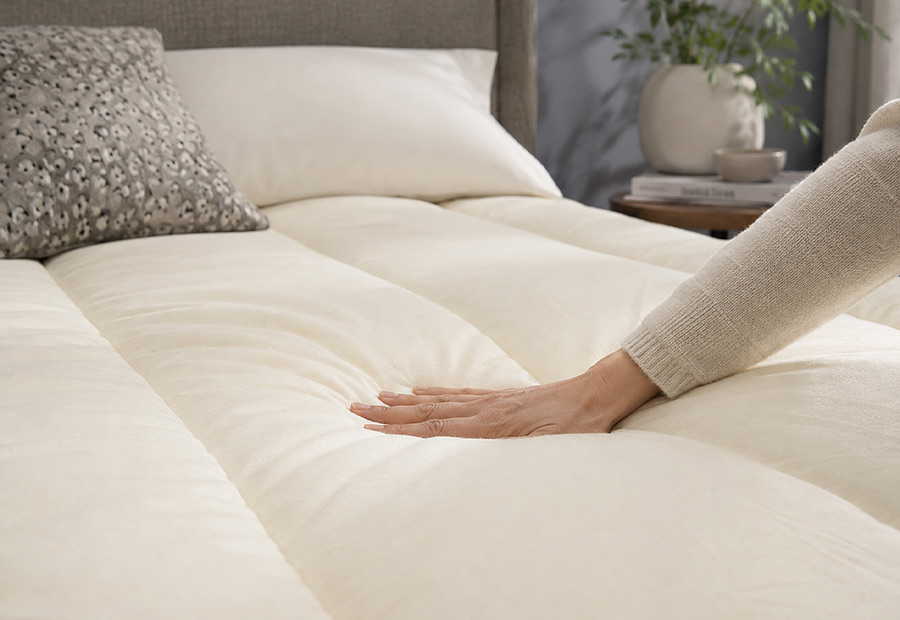
Natural crimp helps wool create fullness and insulating air pockets.
Wool can create a comfortable layer without needing synthetic foam.
Airing, shaking and repositioning help natural fibres settle more evenly over time.
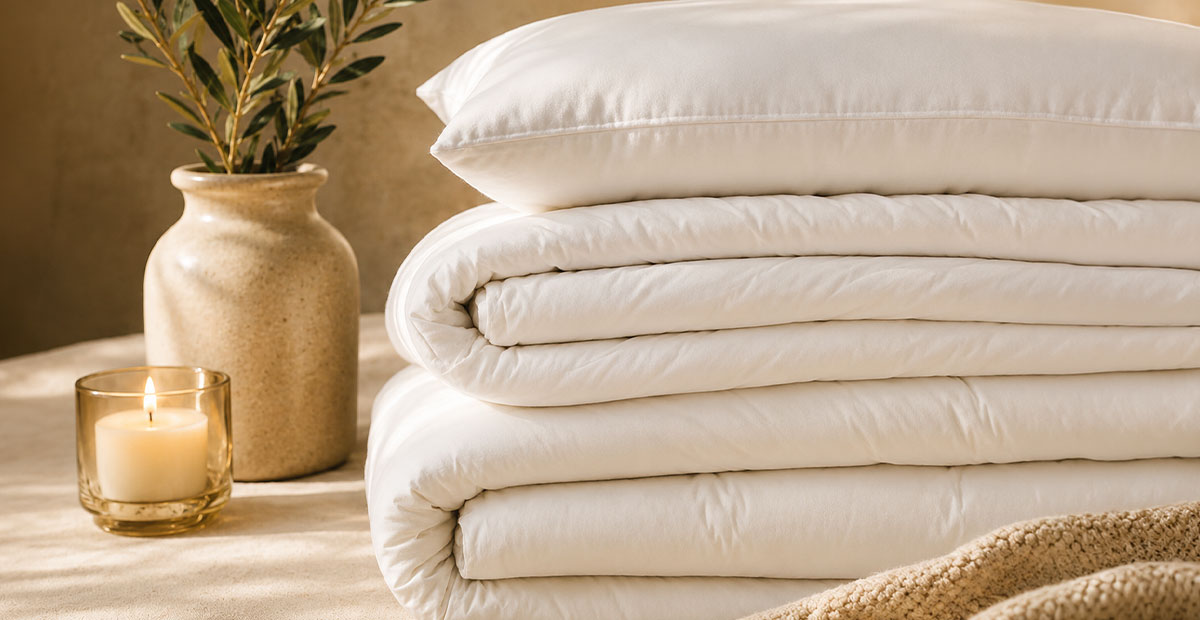
From Head to Toe
One of wool’s unusual strengths is how useful it can be in several different forms of bedding.
The same basic natural qualities — breathability, moisture management, loft and temperature regulation — can serve different purposes depending on where the fibre is used.
That allows wool to form part of a more complete natural sleeping environment rather than being limited to one product.
Wool helps create insulation around the body while allowing heat and moisture to move.
A generous wool layer adds comfort while managing warmth and moisture close to the body.
Wool provides natural loft and support in the area closest to the face and breathing space.
Wool adds light cushioning and a breathable natural layer above the mattress.
Wool Through the Seasons
Wool is understandably associated with warmth, but its usefulness does not disappear when winter ends.
Because wool is breathable and helps regulate temperature, the right weight can remain comfortable through warmer conditions too.
The important part is choosing a duvet weight that suits your body, bedroom and time of year.
Wool's greatest strength is not simply warmth.
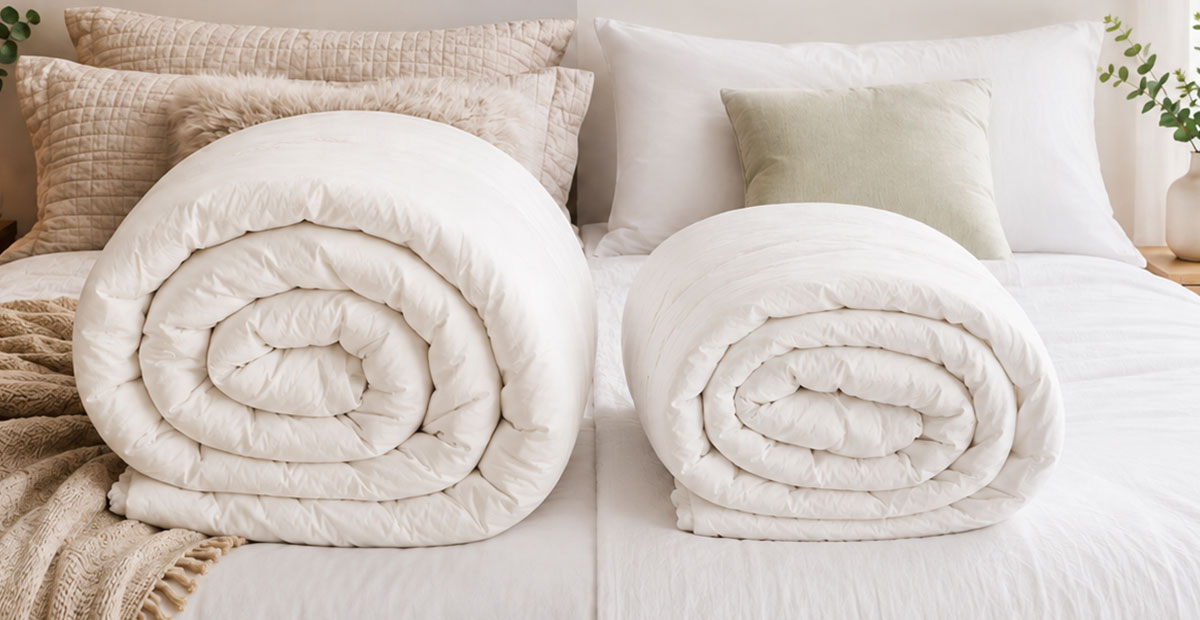
A natural option for warmer months, warmer rooms and people who tend to sleep hot.
A versatile choice for many sleepers through a large part of the year.
Deeper wool warmth for colder bedrooms, colder sleepers and winter conditions.
Freshness
A comfortable bed needs more than softness and insulation.
It also needs to cope with the heat and moisture generated during hours of close contact with the body.
Wool’s breathability and moisture management help the sleep environment feel fresher for longer.
Regular airing and correct care then support those natural characteristics rather than trying to replace them with constant washing.
Renewable and Natural
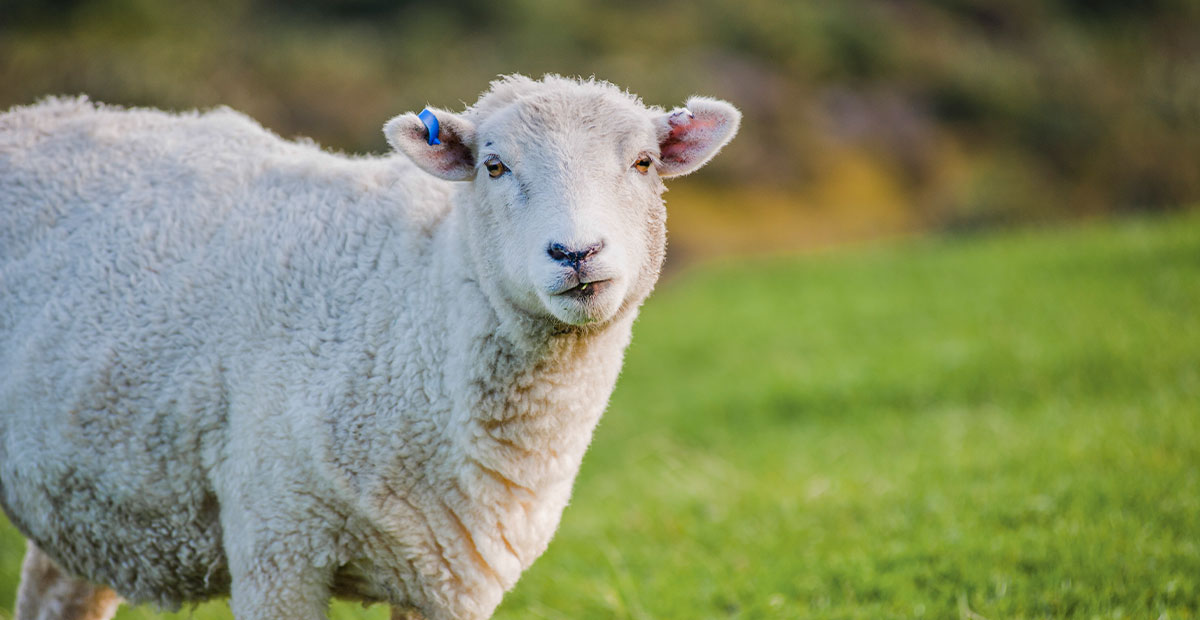
Sheep grow a new fleece as part of their natural cycle. Shearing is part of managing and caring for the flock, and that fleece can then become a useful natural material.
Wool therefore has a very different material story from many synthetic fibres.
It is renewable, biodegradable and rooted in farming and the natural landscape.
For customers wanting to bring more natural materials into the home, wool provides a practical fibre that has already been used and valued for generations.
Sheep naturally grow wool as part of their annual cycle.
Shearing removes the fleece and forms part of responsible flock management.
Wool is cleaned and processed so that the fibre is suitable for bedding.
Prepared wool is transformed into duvets, pillows, toppers and protectors.
Why Wool Belongs in Bedding
We choose wool because it brings together so many of the qualities that matter when we sleep.
Most of all, wool helps create bedding that feels naturally comfortable.
It works quietly through the night, helping retain warmth without simply trapping it and helping moisture move rather than leaving the bed feeling clammy.
That is what makes wool such a good fibre for bedding.
It is nature’s own comfort.
Naturally Suited to Sleep
Breathability, insulation, moisture management and resilience are already characteristics of the natural fibre.
Our job is to choose good wool, prepare it carefully and make bedding that allows those qualities to do what they have been doing rather successfully since long before anyone invented polyester.