
Air it regularly
Fresh air allows moisture to move away and helps the wool refresh naturally.
The Devon Duvets Care Guide
A Devon Duvets wool duvet is made to be slept under, loved and lived with. With the right care, it can provide many years of natural comfort.
Wool is breathable, temperature regulating, moisture managing and naturally resistant to dust mites. These qualities help a wool duvet remain fresher for longer.
Because of this, your duvet does not need frequent washing. In fact, the less you wash it, the better.
Air regularly. Protect it with a cover. Wash only when necessary.Always check the care label attached to your individual Devon Duvets product before washing. The product-specific label should take priority over general advice.

Fresh air allows moisture to move away and helps the wool refresh naturally.
A breathable cotton cover protects the duvet from everyday wear and is far easier to wash.
Wool performs best when it is not repeatedly subjected to water, detergent and movement.
Never use or store a wool duvet until every part of it is thoroughly dry.
Your interactive care handbook
Prefer something you can browse visually? Open our interactive wool duvet care handbook and turn through the advice at your own pace.
The handbook brings together the essential care instructions in one easy-to-follow format, including airing, washing, drying and storing your duvet correctly.
It is useful before washing your duvet, after an accidental spill, or when someone at a laundry service confidently says, “It’ll probably be fine.”
For the most comfortable reading experience, use the full-screen control within the handbook, particularly on smaller screens.
Use the arrows to turn the pages or select full screen to enlarge the handbook.
Why wool requires different care
A wool duvet is not the same as a synthetic duvet. The wool fibres inside are natural and have their own resilience, breathability and ability to manage moisture.
Wool does not need harsh detergents, dry-cleaning chemicals or frequent washing to remain comfortable.
Washing too often, using the wrong detergent or exposing the duvet to too much heat and movement can damage the fibres and alter how the duvet feels.
Think of wool duvet care as something simple and natural: fresh air, gentle movement, careful washing only when required and complete drying before use or storage.
Airing your wool duvet
Regular airing is the simplest and most effective way to keep your wool duvet feeling fresh.
Whenever you change your bedlinen, give the duvet a gentle shake and allow it to breathe.
On a dry day, it can be aired outside for a few hours. If outdoor airing is not practical, place it somewhere indoors with plenty of circulating air.
Aim to air the duvet at least every few weeks, or more regularly if you enjoy refreshing your bedding whenever the bedlinen is changed.
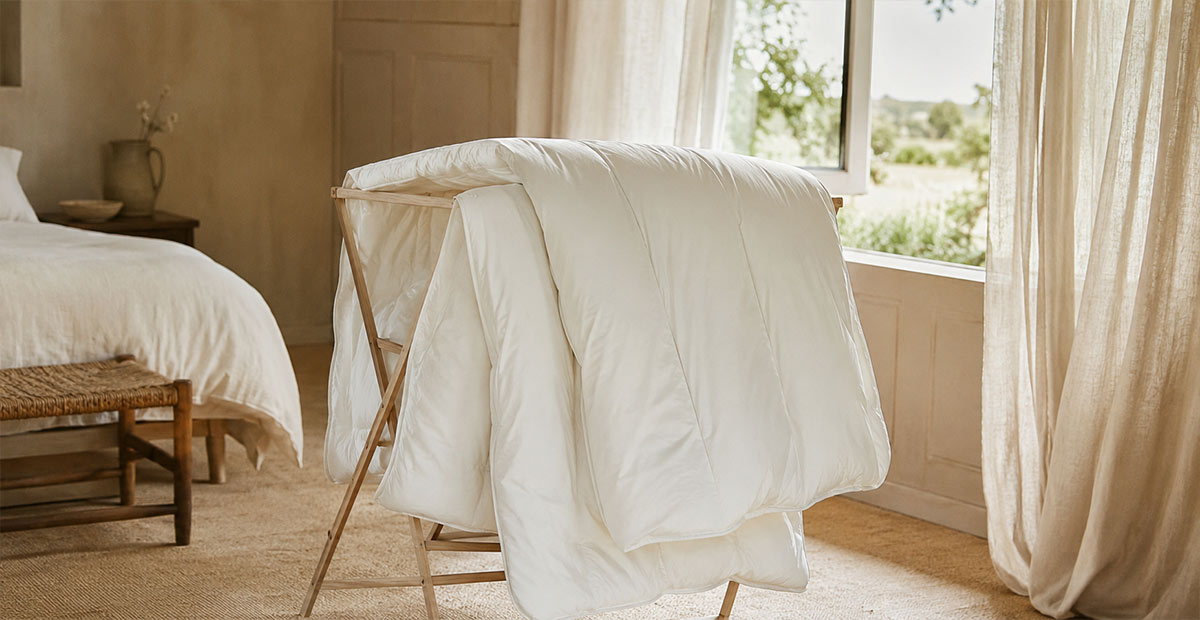
Spread the duvet broadly so that air can reach both sides.
Use a clean, dry bannister with plenty of open space around it.
Drape it over the top of a clean bedroom door where air can circulate.
Place it over a chair or airer near an open window on a dry day.

Protecting your duvet
A duvet cover is the easiest way to protect your wool duvet from everyday contact, marks and wear.
A natural cotton duvet cover is ideal because it protects the duvet while still allowing the wool to breathe.
Washing the cover regularly will usually be enough to keep the duvet beneath it feeling clean and fresh.
Does a wool duvet need washing?
Wool naturally manages moisture and is resistant to dust mites. Regular airing and a clean duvet cover will therefore normally provide all the routine care your duvet needs.
When an accident or mark means washing is genuinely necessary, the method matters enormously.

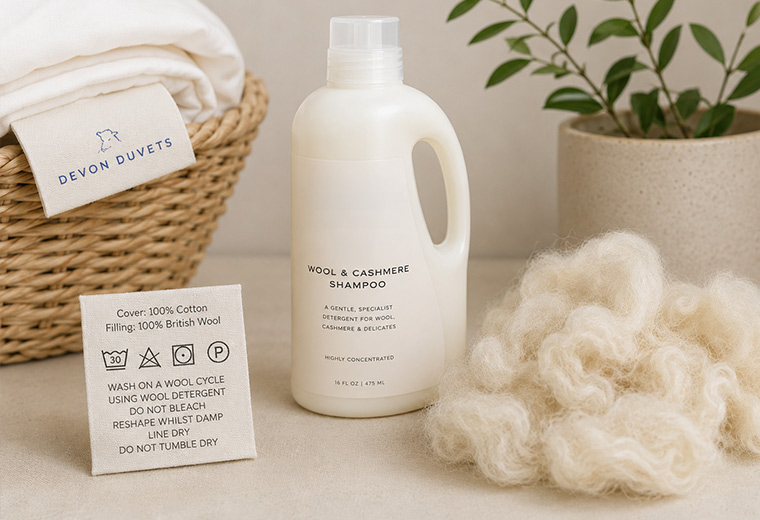
The combination of heat and movement can cause wool fibres to shrink or felt. Once this has happened, the damage cannot be reversed. Humanity invented tumble dryers, then immediately discovered a long list of things that absolutely must not enter them.
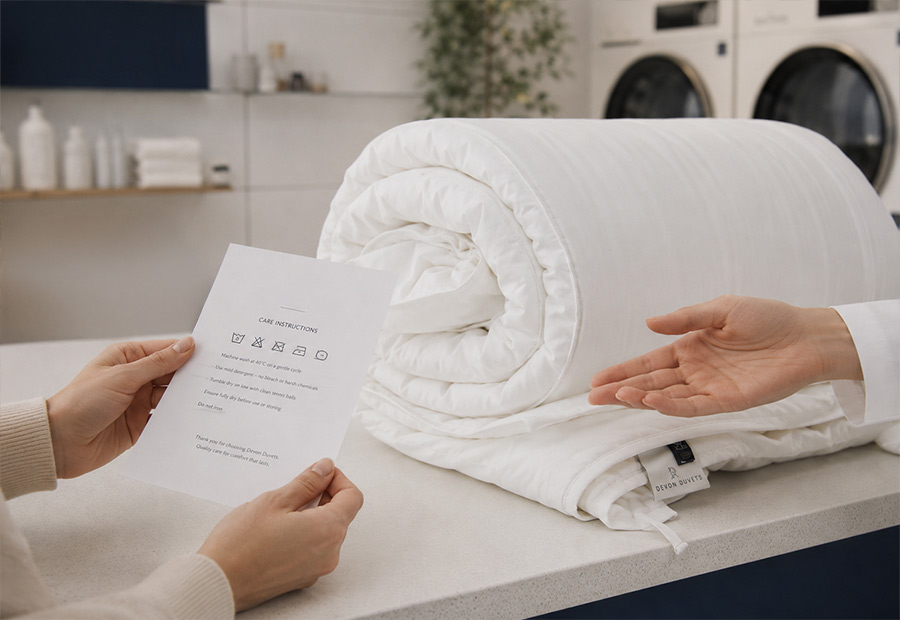
Be careful with laundry services
Some professional laundry services use industrial machines that may not provide a true 30°C wool cycle.
They may also use general-purpose or standard “delicates” detergents, which are not necessarily suitable for natural wool.
Never assume that a laundry service understands the care requirements of your duvet simply because it handles bedding.
Explain that it is a natural wool duvet and ask them to confirm each stage of the proposed cleaning process before leaving it with them.
Questions for a laundry service
A general delicate or low-temperature programme is not automatically suitable for wool.
Ask them to confirm that the product is specifically formulated for washing wool fibres.
Make this requirement explicit rather than assuming it will be understood.
Confirm that it can be dried naturally and completely with adequate circulation.
If the laundry service cannot confidently confirm every stage, it is safer not to leave your wool duvet with them.
Drying your wool duvet
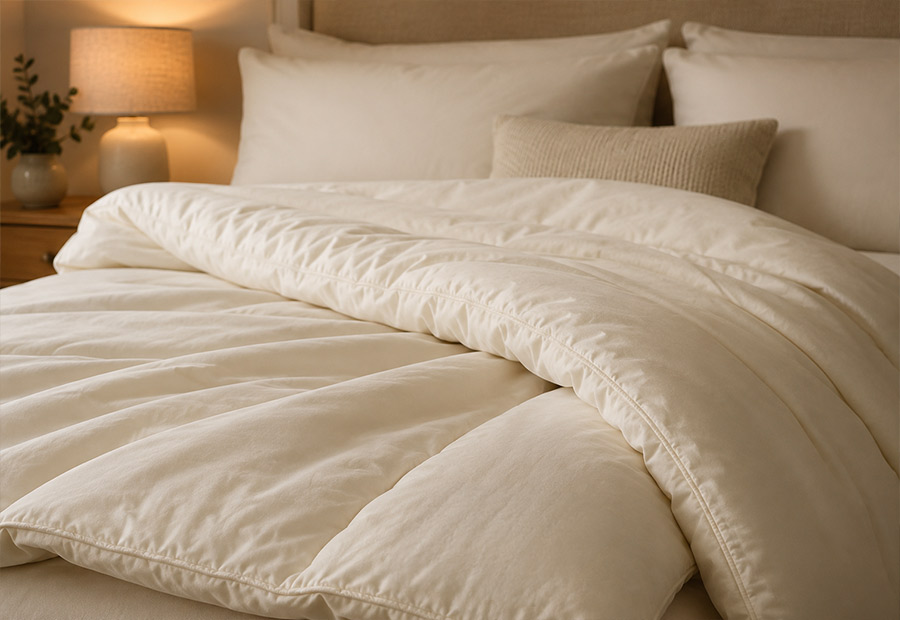
After washing, gently reshape the duvet and allow it to dry naturally.
Ideally, spread it flat or drape it broadly over a strong line or airer, making sure that air can circulate around as much of the duvet as possible.
Turn or reposition it periodically so that thick and folded areas are exposed to the air.
Do not place it back on the bed or into storage until every part of the filling is completely dry.
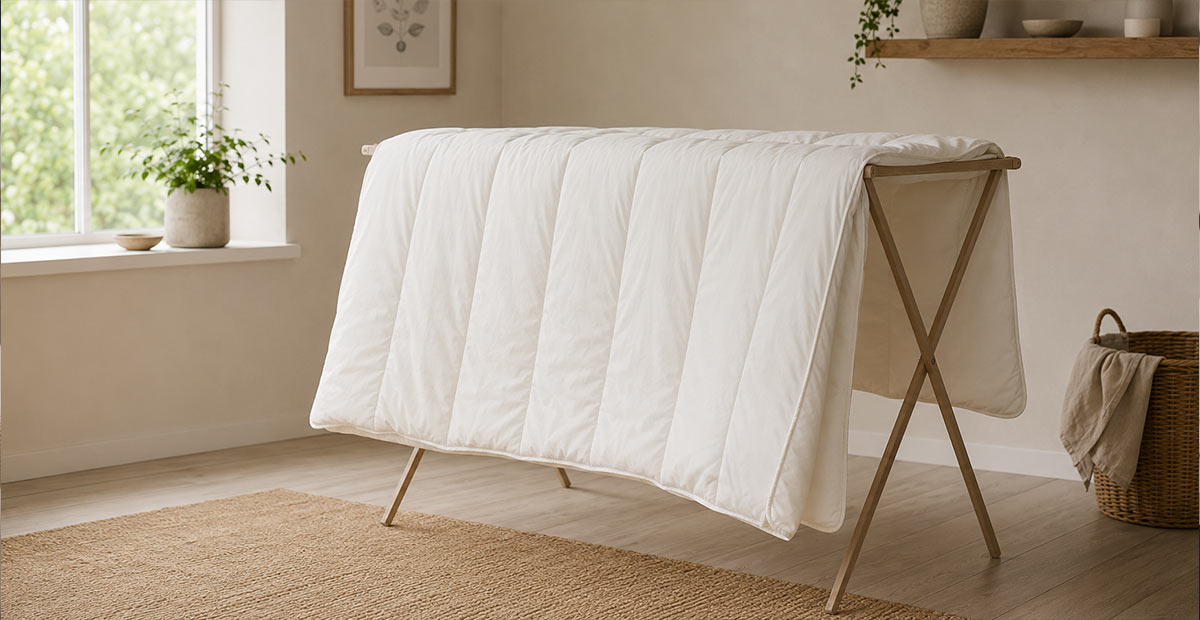
Why reshaping matters
Washing and spinning can move the wool slightly within the duvet’s stitched sections.
While the duvet is still damp, gently smooth and redistribute the filling with your hands.
Avoid pulling, twisting or aggressively shaking the wet duvet. Wet natural fibres are heavier and should be handled with care.
Storing your wool duvet
Before storing your duvet, make sure it has been thoroughly aired and is completely dry.
Store it in a dry, ventilated cupboard away from damp rooms and direct sources of moisture.
Avoid plastic bags and sealed containers, as these can trap condensation and prevent the natural fibres from breathing.
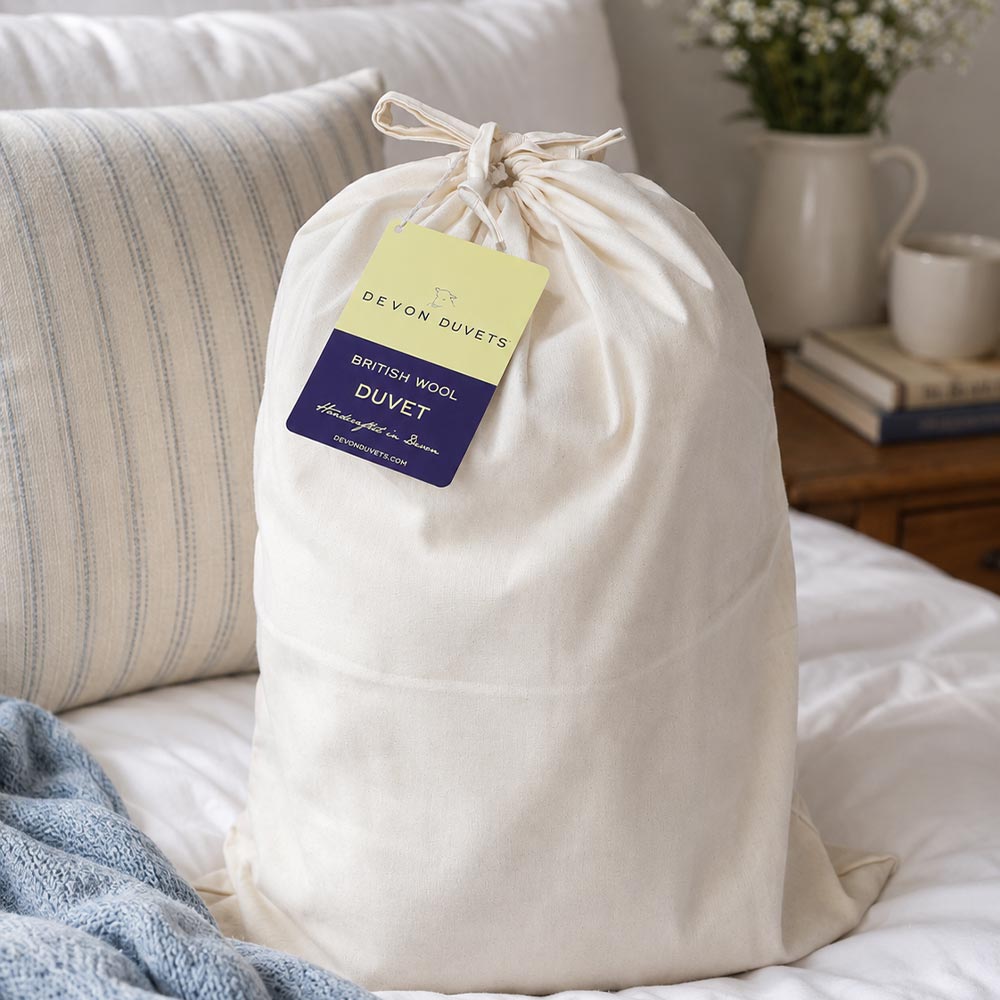
The cotton storage bag supplied with your Devon Duvets duvet is ideal. It protects the duvet from dust while allowing airflow around the natural fibres.
Give the duvet several hours of fresh air before packing it away.
Use the supplied cotton bag or another clean fabric storage bag.
Avoid cellars, damp cupboards and sealed plastic storage containers.
Common care questions
Air it at least every few weeks. Airing it whenever you change the bedlinen is an easy routine to remember and requires almost no additional effort.
Only when genuinely necessary. A duvet cover and regular airing should provide most of the routine care it requires.
No. A normal 30°C cotton, synthetic or everyday programme may use movement and spinning that are too aggressive. Use a true wool cycle only.
No. Use only detergent specifically designed for wool. Standard and biological detergents may be too harsh for the natural fibres.
No. Even a cooler tumble-dryer setting introduces heat and repeated movement that can cause the wool to shrink or felt.
Check the centre, corners, stitched sections and any areas that were folded over the airer. They should all feel dry and free from cool or damp patches.
Simple care summary
Wool duvet care does not need to be complicated. In most cases, regular airing and a clean duvet cover will do far more good than repeatedly marching the poor thing towards the washing machine.
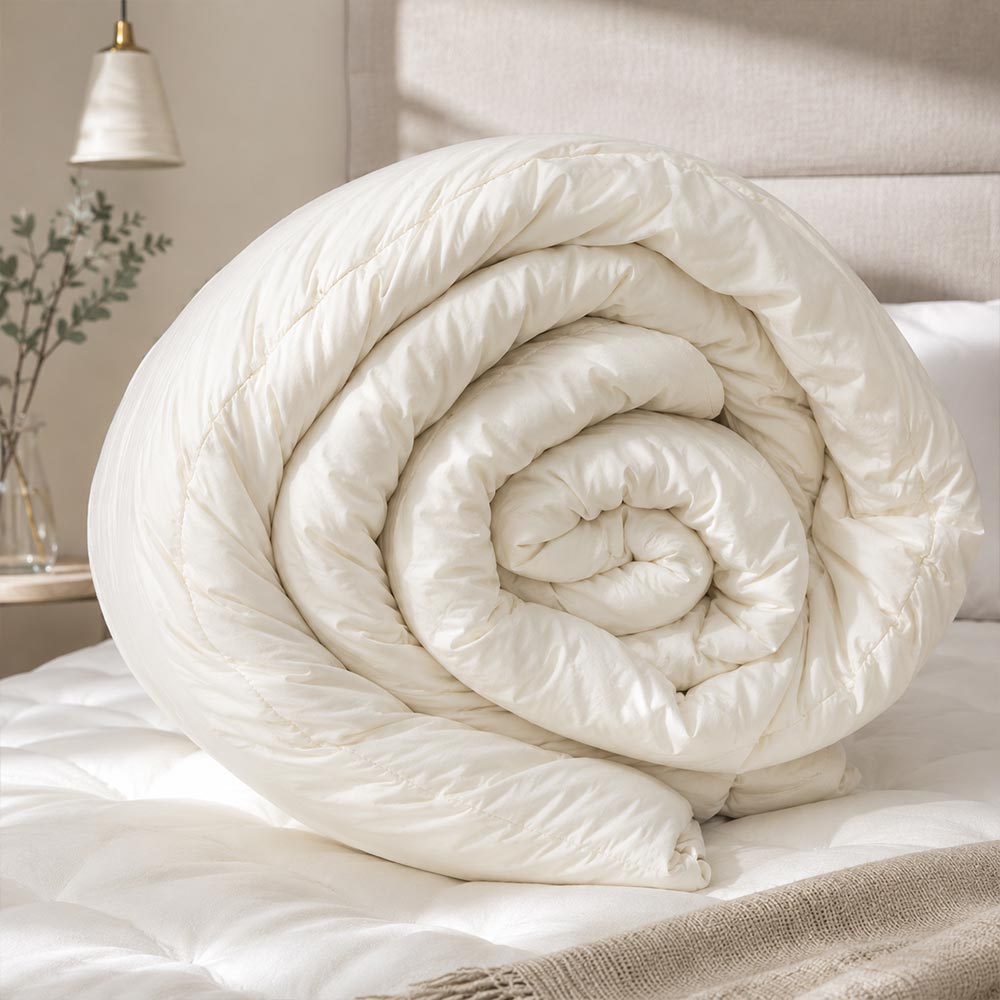
Caring for natural wool bedding can feel unfamiliar when you are used to synthetic products.
If you are unsure whether your duvet needs washing, or you would like advice before cleaning it, please contact our friendly team.
Call us on 01752 345399